Flat Clearance Coney Hall — Recycling and Sustainability
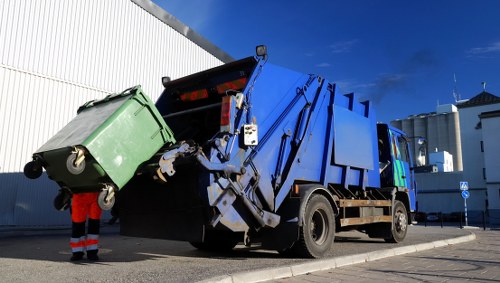 Welcome to our sustainability and recycling statement for Flat Clearance Coney Hall. We aim to lead local efforts for an eco-friendly waste disposal area and a well-managed sustainable rubbish area that supports reuse, repair and responsible disposal. This page explains our recycling targets, local transfer stations we use, charity partnerships, low-emission transport and how we align with borough waste separation approaches.
Our recycling percentage target
We have set a measurable recycling percentage target of 70% diversion from landfill within the next 24 months for routine flat clearances and household removals in the Coney Hall area. This target covers materials recovered through recycling, refurbishment, donation and specialist hazardous streams. The 70% goal is supported by ongoing audits of loads, segregation at source and investment in reuse routes. To reach that target we combine practical crew training, detailed job-level sorting, and post-job reporting. Every clearance is catalogued to capture weight and composition data so we can track progress toward the recycling percentage target and optimise processes over time.
Local transfer stations and transfer partnerships
We operate with access to several local municipal transfer stations and household waste recycling centres (HWRCs) across the boroughs. Typical facilities we engage include borough HWRCs in Bromley and neighbouring Croydon and Lewisham transfer hubs, which accept segregated inert waste, wood, metal, glass, paper and electrical goods. Where available we use licensed transfer stations specialising in bulky waste and electrical recycling so fewer items are sent to landfill.Our routes are planned to maximise drop-offs at the most appropriate facility. That means light, frequent trips to the nearest transfer station for sorted streams and consolidated loads for onward recycling. This approach reduces double-handling and carbon mileage.
Charity partnerships and community reuse
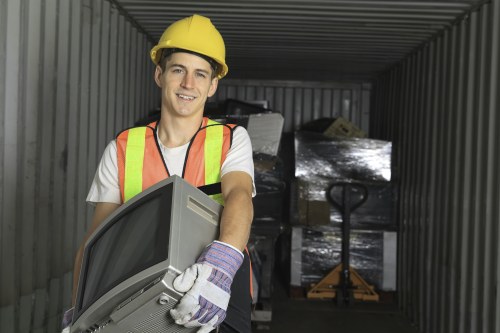
We maintain active partnerships with local and national charities for direct donations and reuse. Typical partners include furniture reuse charities, community centres and national groups that run furniture and clothing redistribution. Items that are in good condition — such as sofas, tables, wardrobes and working appliances — are offered to these partners before being considered for recycling or disposal.In addition to formal charities, we work with accredited social enterprises that refurbish and resell household goods. These reuse pathways reduce the need for new purchases and strengthen the sustainable rubbish area by keeping useful items in circulation. Our teams also separate textiles and small electrical items for specialist recycling streams rather than sending them to mixed residual waste.
We follow the local boroughs approach to waste separation where practical: a combination of mixed recycling streams (paper, card, plastics, metals), separate glass and food waste collections in some areas, and dedicated bulky and electrical routes. The borough-level rules inform how we pre-sort at the property and which transfer stations we use.
On every job we present clear options to residents and estate managers, explaining which items can be donated, refurbished or recycled. Our crews carry labelled containers for paper & card, metal & glass, textiles and WEEE so segregation starts immediately.
Low-carbon vans and fleet strategy
We are rolling out low-emission vehicles to reduce the carbon footprint of each clearance. Our fleet includes electric vans for local urban trips, hybrid vehicles for mixed routes and modern Euro VI diesel units for longer journeys when needed. Route optimisation software, delivery consolidation and scheduled runs to transfer stations reduce overall mileage and emissions.
![A group of nine black plastic rubbish bags filled with waste are piled together on a grassy area near a stone wall. The bags are loosely tied at the top and vary slightly in size and shape, with some appearing more stretched and others more compact. They are positioned in the foreground, occupying most of the visual space, with the stone wall providing a textured, natural backdrop composed of irregularly shaped, weathered stones in shades of brown and gray. The grass beneath the bags is green with patches of small, fallen leaves scattered across its surface, suggesting an outdoor setting. The overall lighting is natural, possibly slightly overcast, giving a soft, even illumination to the scene. This image depicts typical rubbish disposal practices, aligning with services offered by companies like Flat Clearance Coney Hall in the local [POSTCODE] area, focusing on the collection and removal of waste materials from residential or commercial premises in the vicinity of Coney Hall, Greater London.](/pub/_photos/rubbish/f1344684032.jpg)
Operational practices and measurement
All clearances are logged with weights and destinations for key streams. We publish internal performance summaries that show recycling percentages per month and per postcode area so trends are clear and improvements are driven by data. Transparency in metrics helps maintain the credible pursuit of our sustainable rubbish area ambitions. Our crews are briefed on best practice in waste handling and on prioritising reuse over recycling when possible. Community engagement and future commitments
We support community reuse events and scheduled bulky waste collections when partners request consolidated pickups. Our aim is to support the circular economy in and around Coney Hall and adjacent boroughs by keeping reusable goods in local circulation and reducing unnecessary transport.
Summary of key sustainable actions:
- 70% recycling target across clearances within 24 months
- Collaborations with local charities and furniture reuse schemes
- Regular use of municipal transfer stations and specialist HWRCs
- Low-carbon vans, route optimisation and reduced idling
- On-site segregation aligned with borough waste separation policies
At Flat Clearance Coney Hall — also referenced as Coney Hall flat clearance or flat removal Coney Hall in our operation notes — sustainability is an operational priority rather than a bolt-on. We will continue to refine our low-emission logistics, deepen charity partnerships and report on progress toward our recycling goals so that every clearance contributes to a greener local environment and a resilient sustainable rubbish area for the community.